When installing a solar power system, choosing the right solar inverter is just as important as selecting the right solar panels. A solar inverter converts the DC electricity generated by solar panels into AC electricity used in homes and businesses.
Different types of solar inverters are designed for different energy needs. Here’s a quick guide to help you understand them:-
1. String Inverter
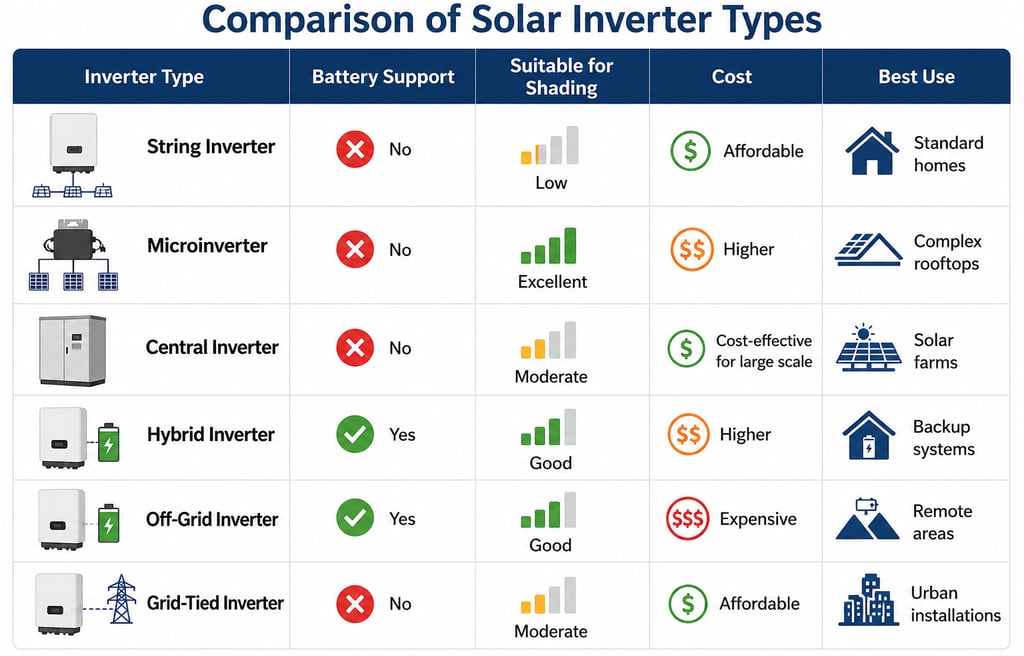
String inverters are the most commonly used solar inverters. Multiple solar panels are connected in a series, and one inverter manages the entire system.These inverters are widely used in standard residential solar installations where the roof receives consistent sunlight throughout the day without shading issues.
Pros:
String inverters are affordable, reliable, and easy to maintain, making them a popular choice for residential solar systems.
Cons:
If one solar panel is shaded or underperforming, it can affect the performance of the entire system.
2. Microinverter
Microinverters are installed on each individual solar panel, allowing every panel to work independently. They are commonly used in homes with complex rooftops, multiple roof directions, or areas where partial shading is unavoidable.
Pros:
Microinverters improve overall energy production and continue performing efficiently even if one panel is shaded.
Cons:
They are more expensive compared to traditional string inverter systems.
3. Hybrid Inverter
Hybrid inverters combine solar power generation with battery storage capability. They are designed for homes and businesses that want backup power during electricity outages or wish to reduce dependence on the utility grid.
Pros:
Hybrid systems provide battery backup, better energy management, and greater energy independence.
Cons:
They have a higher installation cost due to battery integration.
4. Off-Grid Inverter
Off-grid inverters are used in solar systems that operate completely independent of the electricity grid. These systems are commonly installed in remote villages, farms, cabins, and rural areas where utility power is unavailable or unreliable.
Pros:
They provide complete energy independence and reliable electricity in remote locations.
Cons:
They require large battery storage systems, which can increase overall costs.
5. Grid-Tied Inverter
Grid-tied inverters connect directly to the utility grid and are one of the most popular choices for urban solar installations. These systems are ideal for homes and businesses with a stable electricity supply and access to net metering.
Pros:
They are cost-effective, efficient, and help reduce electricity bills through net metering.
Cons:
They do not provide backup power during grid outages unless paired with batteries.
Which Solar Inverter is Best?
Solar inverters are the backbone of every solar power system. Choosing the right type depends on your location, budget, energy usage, and backup power requirements.
String Inverters are ideal for affordable residential systems with good sunlight exposure.
Microinverters work best for shaded or complex rooftops.
Hybrid Inverters are suitable for users needing battery backup and energy independence.
Off-Grid Inverters are designed for remote areas without utility power.
Grid-Tied Inverters are perfect for urban homes looking to reduce electricity costs.
________________
Get an Expert, Independant Review of Your Inverter Choices
Don't guess on the tech that runs your home. We help you look past the sales brochure to evaluate your true capacity your inverter matches your actual home load and panel output perfectly!
☀️ Unsure which inverter type or brand fits your home?
Contact us for your queries – No vendors, no sales pressure, just clear advice.